

Common VO2 Mistakes athletes and fitness enthusiasts Should Avoid
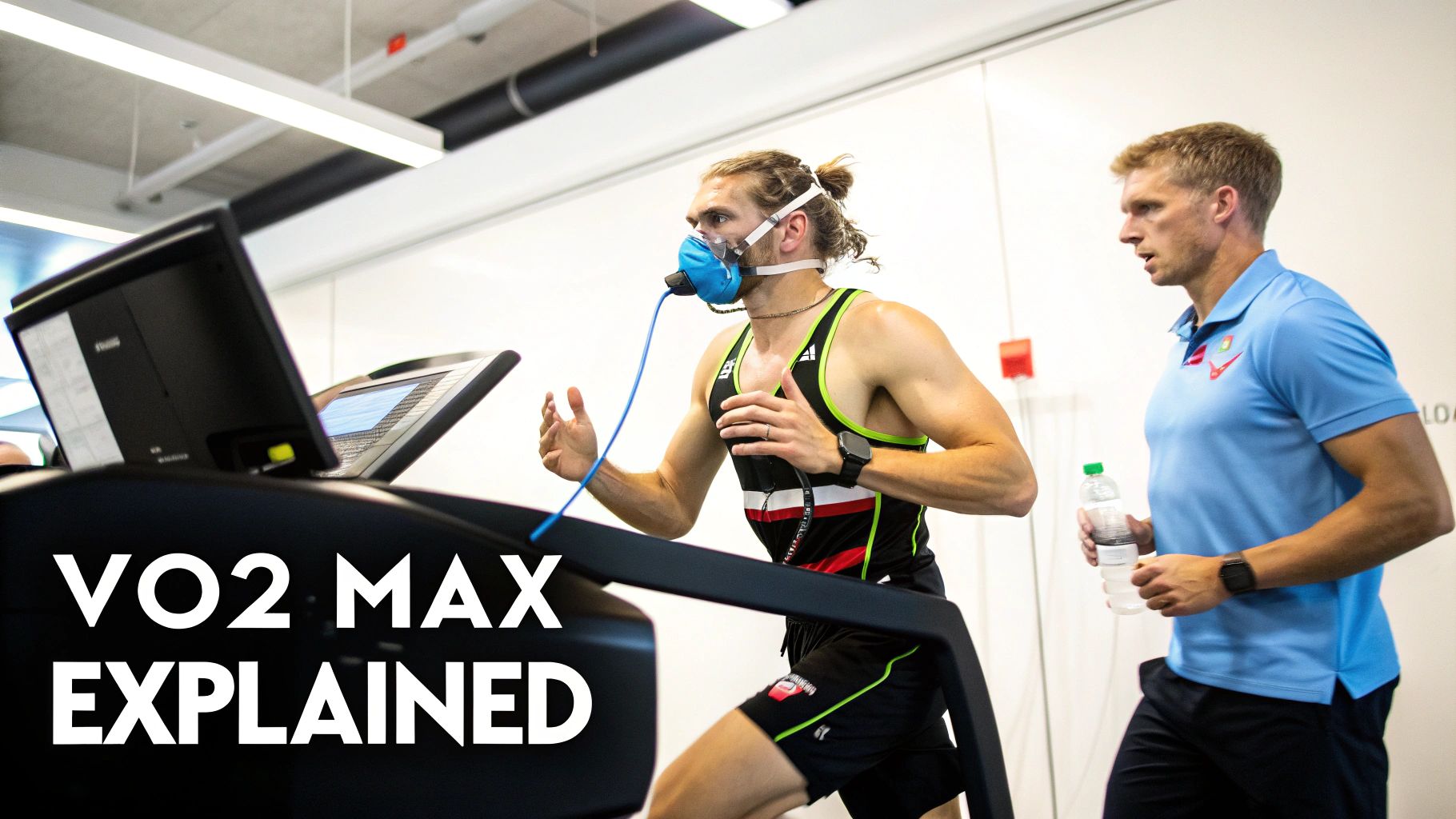
TL;DR
/ Key Takeaways
● Testing Protocol Accuracy: Testing without proper rest, calibration, or warm-ups leads to distorted aerobic metrics and flawed training zones.
● Zone Confusion: Spending too much time in middle-intensity "no-man's-land" degrades explosive capacity without fully triggering top-end cardiovascular adaptations.
● Recovery Integration: High-intensity aerobic intervals require strict recovery management to prevent central nervous system fatigue and chronic overtraining.
Nearly
60% of recreational athletes train in incorrect heart rate zones because they
rely on estimated formulas rather than accurate metabolic data. Pushing too
hard on light aerobic recovery days while under-performing during
high-intensity intervals plateaus cardiovascular capacity and increases injury
risks.
Correcting
key testing and training errors ensures that every mile, sprint, or pedal
stroke directly drives cardiovascular performance.
What Is VO2 and Why Is It Misunderstood?
Aerobic
capacity measures the maximum volume of oxygen an individual can consume and
utilize per minute during intense exercise. It serves as the ultimate benchmark
for cardiovascular fitness, aerobic power, and endurance potential.
When
researching aerobic endurance metrics and performance definitions, athletes
frequently consult this full-form
directory to learn that VO2 stands
for Volume of Oxygen, specifically denoting the rate at which muscles extract
and metabolize oxygen during maximal exertion.
4 Critical Aerobic Capacity Mistakes to Stop
Making
Optimizing
your aerobic ceiling requires avoiding common training traps that drain energy
without delivering physiological returns.
1. Relying on Generalized Age-Based Formulas
Formula-based
maximum heart rate estimates carry a standard error of up to 10 to 12 beats per
minute.
Using
generic equations to set training zones often causes athletes to perform
low-intensity aerobic workouts at an excessively high intensity, disrupting
fundamental cardiovascular base building.
2. Spending Too Much Time in the
"Threshold Black Hole"
Moderately
hard training feels productive, but spending all your time in Zone 3 creates
excessive fatigue without maximizing top-end speed.
High-performance
conditioning relies on polarized training, where 80% of volume is strictly
low-intensity aerobic work and 20% consists of true maximum-effort intervals.
3. Neglecting Proper Testing Preparation and
Calibration
Attempting
a maximal aerobic test while carrying cumulative muscle fatigue skews gas
exchange data and underestimates your true potential.
To
get precise baseline data, enter testing sessions fully rested, hydrated, and
after a structured 15-minute progressive warm-up.
4. Ignoring the Role of Muscular and
Respiratory Efficiency
A
high aerobic ceiling is useless if your respiratory muscles or mechanical
movement patterns fatigue prematurely.
Incorporate
targeted strength training and respiratory muscle conditioning to ensure your
body can utilize the oxygen delivered by your heart and lungs.
|
Training Zone |
% of Max Heart Rate |
Primary Fuel Source |
Common Mistake |
|
Zone 2 (Aerobic Base) |
60% – 70% |
Fatty acids |
Pushing the pace too fast, turning base
building into threshold work. |
|
Zone 3 (Tempo/Threshold) |
70% – 80% |
Carbohydrates |
Over-utilizing this zone, causing chronic
fatigue without peak gains. |
|
Zone 5 (Max Aerobic) |
90% – 100% |
Muscle glycogen |
Cutting recovery periods short, reducing peak
power output per interval. |
How to Structure Effective Interval Workouts
Structuring
high-intensity aerobic intervals requires balancing work durations with recovery
periods to ensure maximum time spent at peak oxygen consumption.
Target 3 to 5 Minute Intervals for Peak Output
Work
efforts lasting between 3 and 5 minutes force the cardiovascular system to
operate at its absolute ceiling for an extended duration.
Shorter
sprints rely heavily on anaerobic energy stores, while longer intervals force
you to drop power output below the threshold needed for top-tier adaptation.
Allow Equal Work-to-Rest Ratios
Use
a 1:1 or 1:0.5 work-to-rest ratio during maximal aerobic workouts to allow
partial heart rate recovery while keeping oxygen uptake elevated.
Dropping
rest periods too low forces early muscle failure, preventing you from
completing the necessary volume of high-yield work.
Frequently Asked Questions (FAQ)
Can you improve your aerobic capacity without a
laboratory test?
Yes,
field tests like the 12-minute Cooper test or 5K time trials offer strong proxy
data to track progress and establish functional training zones.
How fast can an athlete see improvements in
aerobic metrics?
With
consistent polarized training and high-intensity intervals, measurable
adaptations can occur within 4 to 6 weeks.
Does strength training improve oxygen
utilization?
Yes,
heavy compound lifting improves movement economy and neuromuscular efficiency,
allowing you to use less oxygen at any given submaximal pace.
Conclusion
Avoiding
common aerobic conditioning errors allows athletes to maximize every training
session. By establishing accurate heart rate zones, respecting polarized
intensity, and structuring intervals correctly, fitness enthusiasts can
systematically elevate their endurance performance.



I vividly recall training for a Crossy Road esque obstacle course, struggling to find the right balance between high-intensity drills and recovery. My initial approach was all-out, leading to burnout. Adjusting to a 1:1 work-to-rest ratio, similar to the article's recommendation, dramatically improved my sustained output and overall performance.
ReplyDelete